Health guide
Sciatic Nerve Flossing: How to Do It, How Often, and When to Stop
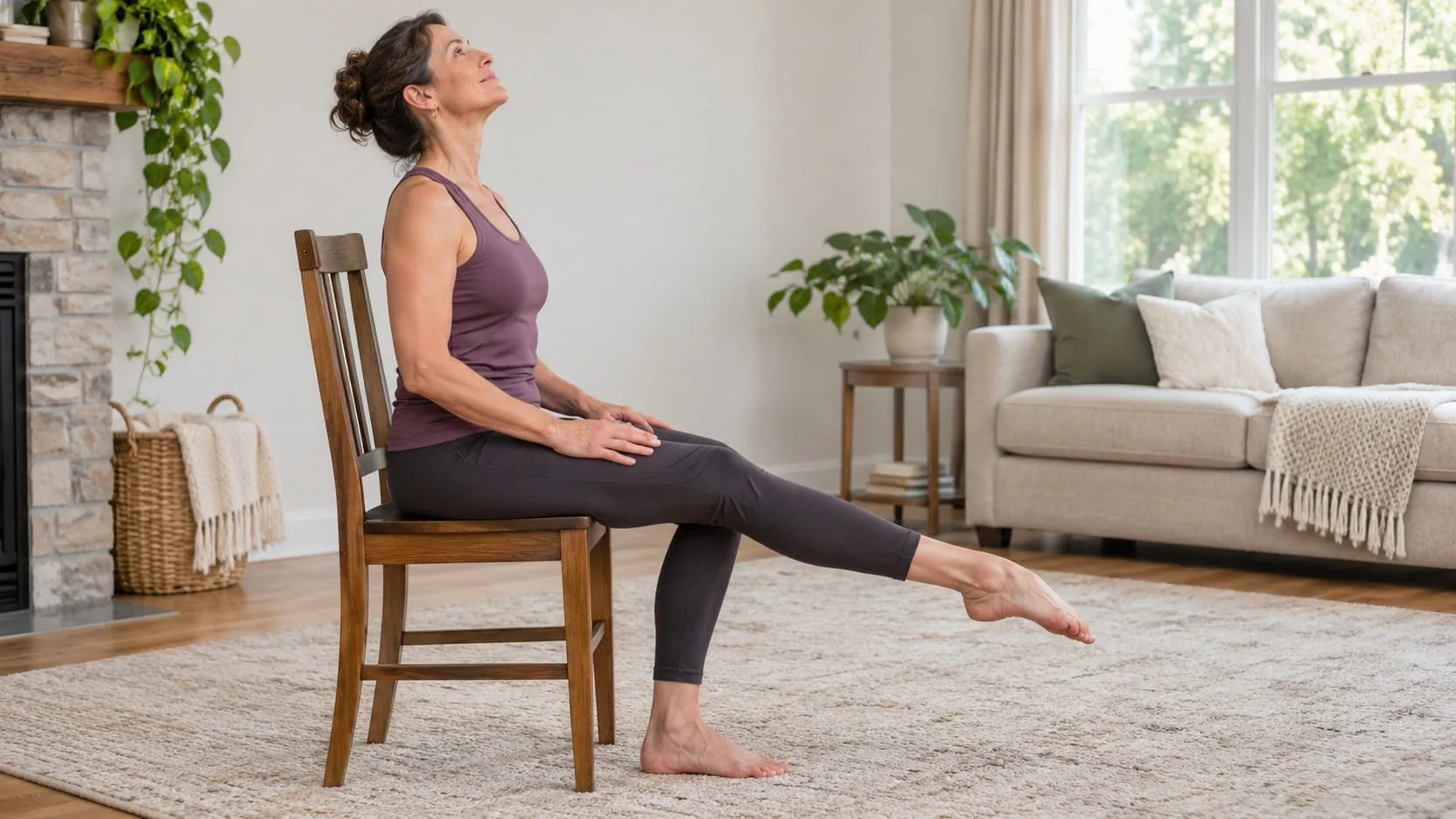
Nerve flossing, also called a nerve glide or a nerve slider, is one of the most searched home exercises for sciatica, and one of the most oversold. The idea is simple: the sciatic nerve has to slide as your hip, knee and ankle move, and an irritated nerve may move less freely. Sciatic nerve flossing uses paired movements so the nerve slides along its path instead of being pulled tight at both ends. This guide shows three versions taught by NHS physiotherapy services, how often to do them, what the trials actually measured, and the signs that mean you should stop and get checked. We did not test anyone; every claim names its source.
What Nerve Flossing Is and How It Works
The sciatic nerve starts as several nerve roots in the lower back, runs through the buttock and down the back of the thigh, then splits behind the knee. When you bend forward with straight legs, the whole path gets longer, and the nerve has to glide and stretch to keep up. Nerve flossing, the plain-language name for what physical therapists call neural mobilization or neurodynamics, uses that fact on purpose.
Sliders Versus Tensioners
There are two families of nerve glides, and the difference matters for anyone with sciatica. A slider lengthens the path at one end while shortening it at the other, so the nerve slides along without much stretch. Lifting your head as you straighten your knee is a classic slider: the knee pulls the nerve down the leg, but looking up gives it slack at the top. A tensioner lengthens both ends at the same time, for example dropping your chin while you straighten your knee and pull your toes up, which loads the nerve much more.
What the Mechanics Study Measured
The best measurement of this difference comes from a cadaver study. Researchers measured nerves in the arm during different gliding exercises and found that sliding techniques moved the nerve much further than tensioning techniques, with far less strain: at the wrist, the median nerve strained 0.8% with sliding against 6.8% with tensioning (Coppieters, 2008). The authors concluded the two kinds of exercise should not be lumped together. Two limits are important. These were arm nerves, not the sciatic nerve, and they were in cadavers, not in living people in pain. The study explains why sliders are usually taught first; it does not prove they relieve anything.
Why “Flossing” Is a Slightly Misleading Name
Dental floss saws back and forth through a tight gap. A good nerve slider should feel nothing like that. The NHS Bexley physiotherapy service describes the slider as a flossing technique done slowly and in a relaxed way (Bexley MSK, NHS). If your version feels like you are yanking on the back of your leg, it has turned into a tensioner, or into a hamstring stretch, and it is no longer the exercise people mean.
How to Do Sciatic Nerve Flossing: Three NHS Versions
The three versions below come from NHS hospital and community physiotherapy leaflets. Pick the one that is comfortable for you; there is no evidence that one position is better than another. Before you begin, read the stop signs further down, and if you have never had your leg pain assessed, get it assessed first.
1. The Seated Slider
This is the version South Tees Hospitals NHS gives its patients. Sit on a chair. Straighten one knee and point your toe while you look up toward the ceiling. Then return your foot to the floor while you lower your chin to your chest. Do it slowly, and you should not feel pain at any point (South Tees Hospitals NHS). The Bexley service teaches a similar “head up, leg up; head down, leg down” version, sitting with the backs of the thighs supported and the upper back slumped a little, with the head and the knee moving in the same direction at the same speed (Bexley MSK, NHS).
2. The Lying “Heel to the Sky” Slider
If sitting aggravates your sciatica, lying down may suit you better. Lie on your back and hold the painful leg’s knee toward your chest as far as is comfortable. Gently straighten the knee until you feel a stretch in the back of the leg, then bend it again. Once that feels easy, add pulling your foot and toes toward you as the knee straightens, with the heel pointing at the ceiling (Bexley MSK, NHS). Adding the foot makes the movement harder, so add it only if the plain version stays comfortable.
3. The Ankle Pump Glide
The Bexley radiculopathy page gives a third option for pain that runs from the thigh into the lower leg or foot: lie on your back or side, or sit, hold the back of the knee if needed, straighten the knee as far as it will comfortably go, hold it there, and pump the ankle up and down as if pressing a gas pedal on and off, then lower the leg (Bexley MSK, NHS). Because the knee stays still, this is an easy way to control how much you load the nerve.
How Often to Floss and How Many Reps
There is no tested dose for home nerve flossing. What exists is a range of advice from physiotherapy services, and it is not consistent.
What the Leaflets Say
Bexley MSK suggests about 10 repetitions two to three times a day for its sliders (Bexley MSK, NHS), and 15 to 20 repetitions three times daily for its ankle pump glide (Bexley MSK, NHS). South Tees leaves the number blank and tells patients to repeat as their physiotherapist advises (South Tees Hospitals NHS). The honest reading is that the exact count matters less than how the movement feels.
A Sensible Starting Plan
| Week | What to do | Check |
|---|---|---|
| 1 | One version, 5 to 10 slow repetitions, twice a day | Leg feels the same or better the next morning |
| 2 | Up to 10 repetitions, two to three times a day | No new tingling or numbness |
| 3 onward | Keep the dose that helps; add a second version if you like | Review with a physiotherapist if nothing has changed |
This table is our suggestion built from the leaflets above, not a protocol from a trial. If your leg feels worse the next day, go back a step.
Signs It Is Going Well, and Signs It Is Not
In the McKenzie approach, leg symptoms that retreat up toward the back are read as a good sign; our guide to McKenzie exercises explains this idea, called centralization. Symptoms that spread further down the leg during or after flossing are the opposite, and a reason to stop and ask.
Does Nerve Flossing Work? What the Trials Found
This is where most nerve flossing pages stop being careful. The evidence is promising, but narrower than “it fixes sciatica”.
The Reviews
A 2017 systematic review in the Journal of Orthopaedic and Sports Physical Therapy pooled 40 randomized trials of neural mobilization, 17 of them at low risk of bias. It concluded there were benefits for back and neck pain, that the effect on other conditions remained unclear, and that the conclusions may change as better trials arrive (Basson, 2017). A second 2017 meta-analysis focused on the lower body: of 10 trials with 502 participants, five were in people with low back pain, and in those it found large effects on pain and disability, while calling for more high-quality studies (Neto, 2017).
What a Sciatica Trial Looked Like
Trials specific to sciatica are small. In one, 28 people with sciatica received sciatic neural mobilization together with joint mobilization and soft tissue work, averaging 16 sessions over 12 weeks, and median pain fell from 8 to 2 out of 10 (Almeida, 2019). That sounds dramatic, but the trial had no control group, and sciatica often improves on its own over weeks. It shows the combination is worth studying, not that flossing at home did the work.
What the Physical Therapy Guideline Says
The Academy of Orthopaedic Physical Therapy’s 2021 guideline on low back pain says physical therapists may use neural mobilization alongside other treatments for short-term improvements in pain and disability in chronic low back pain with leg pain, a grade B recommendation (George, 2021). The same guideline says mechanical traction should not be used for that group (George, 2021). Note the wording: alongside other treatments, short term, delivered as part of care.
Who Should Be Careful With Nerve Flossing
Nerve glides are gentle by design, but sciatica is a symptom with several possible causes, and some of them need a doctor before any exercise.
Emergency Signs
Bexley MSK tells people with back and leg pain to go to the emergency department immediately if, since the back pain began, they have new difficulty passing or controlling urine, incontinence, numbness around the back passage or genitals, or worsening pain or weakness in both legs (Bexley MSK, NHS). These signs are rare. They are not something to floss through.
When to Get Assessed First
NICE, the UK guideline body, tells clinicians to think about alternative diagnoses in low back pain, particularly when symptoms are new or have changed, and to exclude causes such as cancer, infection, trauma or inflammatory disease (NICE, 2016). If your leg pain started after a fall, comes with fever or unexplained weight loss, or you have a history of cancer, see a doctor before you start any exercise program.
Numbness, Weakness and Nerve Damage
A pull is allowed; numbness that spreads, or a foot that starts to slap or catch, is not. If you already have reduced feeling in your feet, for example from diabetes, you may not notice when a glide goes too far, so have a physiotherapist set the range with you.
Where Nerve Flossing Fits in a Sciatica Plan
Flossing is one small piece. The guideline bodies put more weight on staying active and on structured exercise.
Staying Active Comes First
NICE tells clinicians to encourage people with low back pain and sciatica to continue normal activities and to consider a group exercise programme for an episode or flare-up (NICE, 2016). A few minutes of nerve glides fits inside that, alongside walking and whatever exercise your physiotherapist sets.
Traction and Inversion
Many people with sciatica also look at traction devices and inversion tables. The evidence there is thinner: the North American Spine Society found insufficient evidence to recommend for or against traction for lumbar disc herniation with radiculopathy (NASS, 2012). Our page on inversion tables for sciatica covers who might try one and who should not, and our guide to decompressing your spine compares the options without a machine.
Nights and Sleep
Sciatica often bothers people most at night. Our guide to the best sleeping position for sciatica covers pillows and positions that clinicians suggest, and what the one study on sleep posture actually found.
The Takeaway
Sciatic nerve flossing is a reasonable, low-cost thing to try if a clinician has ruled out the serious causes of your leg pain. Use a slider rather than a tensioner, move slowly, allow a pull but never pain, and start with about 10 repetitions a couple of times a day. The research supports neural mobilization as part of physical therapy for back pain with leg pain, mainly for short-term relief; it does not show that flossing on its own cures sciatica. If your symptoms spread, weaken your leg or affect your bladder or bowels, stop and get help.
Your questions, answered
Frequently Asked Questions
What does flossing the sciatic nerve do?
It moves the sciatic nerve back and forth through the tissues around it, usually by pairing a knee straightening with a head or ankle movement. The aim is to ease an irritated nerve without stretching it hard. Cadaver work on arm nerves shows sliders move a nerve more with less strain, but nobody has filmed this happening in living people with sciatica.
How often should nerve glides be performed?
NHS leaflets give different doses: one Bexley MSK page suggests about 10 slow repetitions two to three times a day, another 15 to 20 repetitions three times daily. No trial has compared doses. Start at the low end, keep the movement painless, and let a physiotherapist adjust the number after a week or two.
How to perform nerve glides?
Sit with your thighs supported and let your upper back slump a little. As you straighten one knee, lift your head to look up; as you bend the knee back down, lower your chin. Move slowly, both parts together. You can feel a gentle pull in the leg, but stop if it turns into pain or tingling that lingers.
What is a red flag for sciatica?
Go to an emergency department at once if, since your back pain began, you have new trouble passing or controlling urine, incontinence, numbness around the back passage or genitals, or worsening pain or weakness in both legs. These are rare, but they can signal a nerve compression that needs urgent treatment rather than exercise.
10 sources used for this guide
Each linked to the original. Citations in the text jump here.
View sources
South Tees Hospitals NHS Foundation Trust. Sciatic nerve slider (information for patients, physiotherapy). southtees.nhs.uk.
Bexley MSK (NHS). Lower Limb Neurodynamic Exercises. msk-bexley.nhs.uk.
Coppieters MW, Butler DS. Do 'sliders' slide and 'tensioners' tension? An analysis of neurodynamic techniques and considerations regarding their application. Manual Therapy 2008;13(3):213-221.
Bexley MSK (NHS). Lumbar Radiculopathy. msk-bexley.nhs.uk.
Basson A, Olivier B, Ellis R, Coppieters M, Stewart A, Mudzi W. The Effectiveness of Neural Mobilization for Neuromusculoskeletal Conditions: A Systematic Review and Meta-analysis. Journal of Orthopaedic and Sports Physical Therapy 2017;47(9):593-615.
Neto T, Freitas SR, Marques M, Gomes L, Andrade R, Oliveira R. Effects of lower body quadrant neural mobilization in healthy and low back pain populations: A systematic review and meta-analysis. Musculoskeletal Science and Practice 2017;27:14-22.
Almeida RS, Machado E, Yamato TP, Santos De Melo L, Nogueira LAC. Pragmatic neural tissue management improves short-term pain and disability in patients with sciatica: a single-arm clinical trial. Journal of Manual and Manipulative Therapy 2019;27(4):208-214.
George SZ, Fritz JM, Silfies SP, et al. (Academy of Orthopaedic Physical Therapy, APTA). Interventions for the Management of Acute and Chronic Low Back Pain: Revision 2021. Journal of Orthopaedic and Sports Physical Therapy 2021;51(11):CPG1-CPG60.
National Institute for Health and Care Excellence (NICE). Low back pain and sciatica in over 16s: assessment and management, Recommendations. NICE guideline NG59, published 30 November 2016, last updated 29 July 2026.
North American Spine Society (NASS), Lumbar Disc Herniation with Radiculopathy Work Group. Lumbar Disc Herniation with Radiculopathy: An Evidence-Based Clinical Guideline. NASS Evidence-Based Clinical Guidelines, 2012.