Review
Teeter FreeStep Review: A Seated Cross Trainer for People Whose Backs Hate Treadmills
By the IntoInversion teamUpdated
- 8 sources
- 11 min read
We earn from qualifying purchases made through our links.
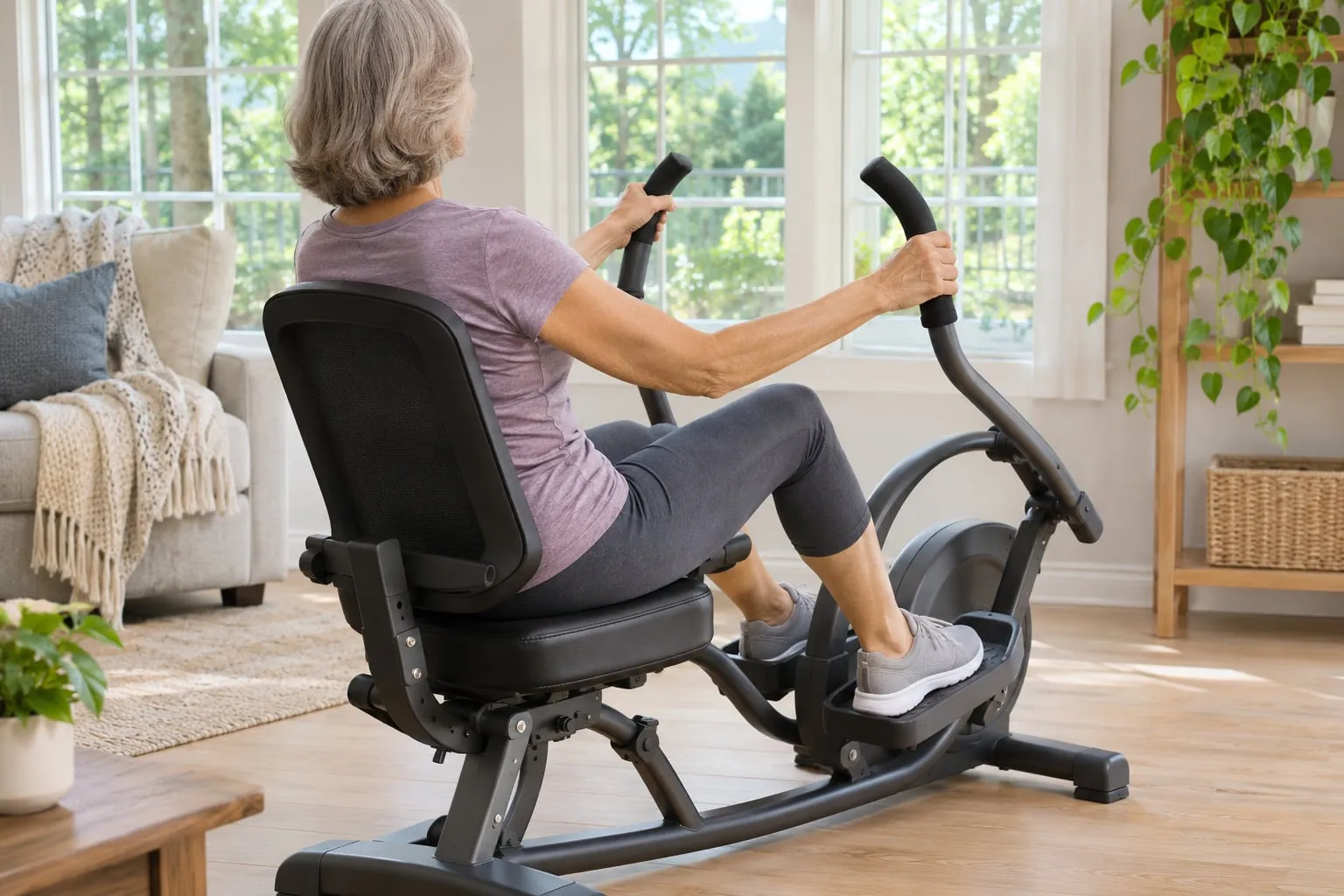

Our pick for most people with a sore back
Teeter FreeStep LT3
The Teeter FreeStep LT3 is the middle model and the one we would start with. It gets the comfort parts that matter when your back is the reason you are shopping, without paying for the LT7’s screen and extra range. It is a cardio machine, not a back treatment, and no trial has tested it for back pain.
- Seat, handles and pedals are the comfort upgrades Teeter lists over the LT1
- Longer standard warranty than the LT1, on Teeter's pages
- 13 resistance levels, and the manual says to start on the lowest
- Weight limit
- 300 lb
- User height
- 4 ft 11 in to 6 ft 6 in
- Warranty
- 3 years
- Price range
- Premium
Maker sourceSpecs from the maker's own product page

Best if you want the lowest entry point
Choose it if you want the same stride and the same 13 resistance levels and are happy with a simpler seat, pedals and handles. Skip it if you plan to use it daily or for long sessions, where seat comfort and the longer warranty start to matter.
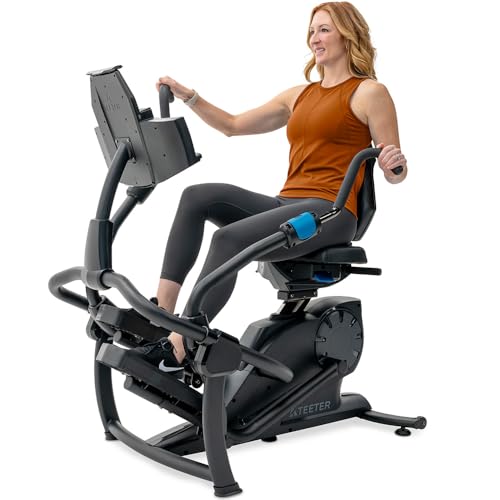
Best if you want the full console and the most support
Choose it if you want guided workouts on a color screen, 20 resistance levels, a larger seat and a higher weight limit. Skip it if you only need steady, easy cardio. The extra features are not what protects your back.
This is a buying guide, not a lab test. We did not use these machines. We read Teeter’s product pages for the LT1, LT3 and LT7 and the LT1 and LT3 assembly and user guide, read the NuStep T4r manual for the comparison, and tied every health statement to a named source. Where the makers disagree with a retailer listing, we say which figure we used. If you buy through our links we may earn a commission, which never decides which model we pick.
Teeter FreeStep at a Glance
There are three current models, sold under one name: the LT1, LT3 and LT7. They share a stride and a frame idea, and they differ in comfort parts, console and resistance range. The table uses figures from Teeter’s own pages and the LT1 and LT3 manual. Anything Teeter does not publish says “Not stated”.
The Specs Side by Side
| Spec | Editor's choiceTeeter FreeStep LT1Premium, price tier 3 of 3Maker source | Teeter FreeStep LT3Premium, price tier 3 of 3Maker source | Teeter FreeStep LT7Premium, price tier 3 of 3Maker source |
|---|---|---|---|
| Weight capacity | 300 lb | 300 lb | 350 lbHighest here |
| User height | 4 ft 11 in to 6 ft 6 in | 4 ft 11 in to 6 ft 6 in | 4 ft 11 in to 6 ft 6 in |
| Warranty | 2 years structural, 1 year mechanical and electrical | 3 years structural, 2 years mechanical and electrical, on Teeter's product pageHighest here | 3 years structural, 2 years mechanical and electricalHighest here |
| Assembly and setup | 7-step guide shared with the LT3, tools included; 106.9 lb; 62.1 x 32.5 x 55.4 in assembled | 7-step guide; Teeter recommends two people, about 45 minutes; 110.2 lb; 62.1 x 32.7 x 55.4 in assembled | Not stated; 150.4 lb; 59.0 x 32.7 x 54.8 in assembled |
| Adjustment | 3-position seat recline and variable height; 4-position handles; 13 magnetic resistance levels, 0 to 110 lb | ComfortSelect seat with depth, height and 3-position recline; 4-position SureGrip handles; 13 magnetic resistance levels, 0 to 110 lb | ComfortMax seat with 3-position depth and recline and piston-assist height; easy-lock handles; 20 magnetic resistance levels, 0 to 150 lb |
| How you use it | Digital console with time, distance, speed and calories; media rack | Digital console with time, distance, speed and calories; media rack, water bottle holder, transport wheels | 9 inch color screen, 7 metrics, 21 preprogrammed workouts, Bluetooth heart rate (monitor sold separately), USB port, step lock |
| Buy | See today's price: Teeter FreeStep LT1 on Amazon (opens in a new tab) | See today's price: Teeter FreeStep LT3 on Amazon (opens in a new tab) | See today's price: Teeter FreeStep LT7 on Amazon (opens in a new tab) |
Editor's choiceTeeter FreeStep LT1Maker source- Weight capacity
- 300 lb
- User height
- 4 ft 11 in to 6 ft 6 in
- Warranty
- 2 years structural, 1 year mechanical and electrical
- Assembly and setup
- 7-step guide shared with the LT3, tools included; 106.9 lb; 62.1 x 32.5 x 55.4 in assembled
- Adjustment
- 3-position seat recline and variable height; 4-position handles; 13 magnetic resistance levels, 0 to 110 lb
- How you use it
- Digital console with time, distance, speed and calories; media rack
Teeter FreeStep LT3Maker source- Weight capacity
- 300 lb
- User height
- 4 ft 11 in to 6 ft 6 in
- Warranty
- 3 years structural, 2 years mechanical and electrical, on Teeter's product pageHighest here
- Assembly and setup
- 7-step guide; Teeter recommends two people, about 45 minutes; 110.2 lb; 62.1 x 32.7 x 55.4 in assembled
- Adjustment
- ComfortSelect seat with depth, height and 3-position recline; 4-position SureGrip handles; 13 magnetic resistance levels, 0 to 110 lb
- How you use it
- Digital console with time, distance, speed and calories; media rack, water bottle holder, transport wheels
Teeter FreeStep LT7Maker source- Weight capacity
- 350 lbHighest here
- User height
- 4 ft 11 in to 6 ft 6 in
- Warranty
- 3 years structural, 2 years mechanical and electricalHighest here
- Assembly and setup
- Not stated; 150.4 lb; 59.0 x 32.7 x 54.8 in assembled
- Adjustment
- ComfortMax seat with 3-position depth and recline and piston-assist height; easy-lock handles; 20 magnetic resistance levels, 0 to 150 lb
- How you use it
- 9 inch color screen, 7 metrics, 21 preprogrammed workouts, Bluetooth heart rate (monitor sold separately), USB port, step lock
Maker source from the maker's own page or manual, not independently testedListing only retail listing, no maker spec sheetNot stated the maker publishes nothing
One Number to Check
Teeter’s manual and its LT1 and LT3 pages give 300 lb as the weight limit for those two models, and the LT7 page gives 350 lb. Some retailer titles show a single higher figure for the whole range. Use the figure for the exact model you are buying, and check it against the maker’s page before you order.
What the FreeStep Is
A cross trainer, also called an elliptical, lets you move your legs in a smooth looping path while your hands hold moving handles. The FreeStep is a seated version. You sit against a back support, your feet rest on pedals in front of you, and the handles move with your legs.
Recumbent Cross Trainer vs Recumbent Bike
A recumbent bike gives you a seat and a pedal circle, with no moving handles. The FreeStep adds linked handles, so your arms, shoulders and chest can do part of the work, and Teeter’s guide lets you work arms alone or legs alone. If all you want is easy leg cardio from a chair, a recumbent bike is simpler, and it is outside the scope of this page. If you want a seated machine that can also give your upper body a job, this is the category.
The Seated Stride
Teeter describes the motion as “Physical Therapy Technology with a patented natural stride licensed from commercial physiotherapy steppers” (Teeter, LT3 page). It also describes a Dual Power Motion that engages both the upper and lower body. Both are Teeter’s words. We found no independent measurement of the stride, so read them as a description of the design and not as proof of an outcome.
What the design does give you, on Teeter’s pages, is a supported seat with adjustable depth, height and recline, so your trunk is held while your limbs move. Whether that suits your back is a personal question, and we come to it below.
What Muscles the FreeStep Works
The user guide for the LT1 and LT3 is specific. With the handles in an upright grip, the guide says the motion targets biceps, shoulders and chest. With a lower grip it targets triceps, forearms and shoulders. For the legs, setting the seat back to a reclined position engages the glutes and quadriceps more (Teeter, LT1 and LT3 manual).
The guide also lets you use legs only or arms only, and suggests shifting effort between muscle groups to avoid fatigue. That flexibility is the real practical benefit: on a day your shoulders are sore you can rest the arms, and on a day your hips are tight you can let the handles do less.
Teeter FreeStep LT1 vs LT3 vs LT7
The three models are close in the stride and different in what surrounds it. The facts below come from the Teeter pages for each model.
FreeStep LT1: The Entry Model
The LT1 has a digital console that tracks time, distance, speed and calories, with a media rack. It gives 13 magnetic resistance levels turned by a dial, with a stated range of 0 to 110 lb. The seat is adjustable with a three-position recline and variable height, the pedals have a large grip surface with edge guards, and the handles have four positions. Teeter lists a weight of 106.9 lb, a user height range of 4 ft 11 in to 6 ft 6 in, and a 300 lb weight capacity. The warranty on its page is 2 years structural and 1 year mechanical and electrical (Teeter, LT1 page).
The entry pointMaker source
Teeter FreeStep LT1
by TEETER
Best for a first seated cross trainer where you want the stride and the resistance range without paying for upgrades.
Skip it if you will sit on it for long sessions or want the longer warranty.
The entry model: the same stride and the same 13 resistance levels as the LT3, with a simpler seat, pedals and handles.
- Weight limit
- 300 lb
- User height
- 4 ft 11 in to 6 ft 6 in
- Warranty
- 2 years
- Price range
- Premium
What we like
- Same 13 resistance levels as the LT3
- Lightest of the three at 106.9 lb
- Seat reclines and adjusts in height
Keep in mind
- Shorter standard warranty than the LT3
- Simpler seat, pedals and handles
- Basic console, no preset workouts
Full specs
- Price range
- Premium
- Weight capacity
- 300 lb
- User height
- 4 ft 11 in to 6 ft 6 in
- Door and frame fit
- 3-position seat recline and variable height; 4-position handles; 13 magnetic resistance levels, 0 to 110 lb
- Mounting
- 7-step guide shared with the LT3, tools included; 106.9 lb; 62.1 x 32.5 x 55.4 in assembled
- Use
- Digital console with time, distance, speed and calories; media rack
- Warranty
- 2 years structural, 1 year mechanical and electrical
Maker sourceFrom the maker's product page. Not stated means the maker publishes nothing.
We may earn a commission. It never changes what we pick, or the order picks appear in.
FreeStep LT3: The Comfort Upgrade
Teeter’s support center says the LT3 has structural upgrades: SoftStep pedals, UltraGlide bearings, SureGrip handles and a ComfortSelect seat (Teeter Support Center, LT1 vs LT3). The LT3 page repeats the 13 levels and the 0 to 110 lb range, and adds a water bottle holder and transport wheels. It lists 300 lb capacity, the same 4 ft 11 in to 6 ft 6 in height range, a weight of 110.2 lb, and a standard warranty of 3 years structural and 2 years mechanical and electrical (Teeter, LT3 page). The same support article puts it more briefly, as a 2-year warranty on the LT3 against 1 year on the LT1, without the structural part (Teeter Support Center, LT1 vs LT3). We use the product page figures; the written terms that ship with the machine are the ones that bind.
The balanced pickMaker source
Teeter FreeStep LT3
by TEETER
Best for most people shopping for a bad back: a supported, adjustable seat, comfortable handles and the longer standard warranty.
Skip it if you want guided workouts on a screen or need a weight limit above 300 lb.
The comfort upgrade over the LT1 (SoftStep pedals, UltraGlide bearings, SureGrip handles, ComfortSelect seat) with a longer standard warranty, without the LT7's screen.
- Weight limit
- 300 lb
- User height
- 4 ft 11 in to 6 ft 6 in
- Warranty
- 3 years
- Price range
- Premium
What we like
- Comfort upgrades over the LT1 listed by Teeter
- Longer standard warranty than the LT1
- Seat adjusts in depth, height and recline
Keep in mind
- 300 lb weight limit
- Basic console, no preset workouts
- Heavy to move at 110.2 lb
Full specs
- Price range
- Premium
- Weight capacity
- 300 lb
- User height
- 4 ft 11 in to 6 ft 6 in
- Door and frame fit
- ComfortSelect seat with depth, height and 3-position recline; 4-position SureGrip handles; 13 magnetic resistance levels, 0 to 110 lb
- Mounting
- 7-step guide; Teeter recommends two people, about 45 minutes; 110.2 lb; 62.1 x 32.7 x 55.4 in assembled
- Use
- Digital console with time, distance, speed and calories; media rack, water bottle holder, transport wheels
- Warranty
- 3 years structural, 2 years mechanical and electrical, on Teeter's product page
Maker sourceFrom the maker's product page. Not stated means the maker publishes nothing.
We may earn a commission. It never changes what we pick, or the order picks appear in.
FreeStep LT7: The Full Console
The LT7 page lists 20 levels of magnetic resistance from 0 to 150 lb, controlled from console keys. It has a 9 inch color screen showing seven metrics, 21 preprogrammed workouts, a Bluetooth heart rate connection (the monitor is sold separately) and a USB charging port. The ComfortMax seat has a larger surface, with piston-assisted height. Teeter lists 350 lb capacity, a weight of 150.4 lb, and the same standard warranty as the LT3 (Teeter, LT7 page).
The full consoleMaker source
Teeter FreeStep LT7
by TEETER
Best for someone who wants guided workouts, a heart rate connection, more resistance and the highest weight limit in the range.
Skip it if you want the simplest, cheapest way to start, or moving a 150 lb machine is a problem for your back.
The top of the range: a color screen with preset workouts, 20 resistance levels, a larger seat and a 350 lb limit.
- Weight limit
- 350 lb
- User height
- 4 ft 11 in to 6 ft 6 in
- Warranty
- 3 years
- Price range
- Premium
What we like
- 350 lb weight limit
- 20 resistance levels
- Color screen with 21 preset workouts
Keep in mind
- Heaviest of the three at 150.4 lb
- Heart rate monitor sold separately
- Most expensive of the three
Full specs
- Price range
- Premium
- Weight capacity
- 350 lb
- User height
- 4 ft 11 in to 6 ft 6 in
- Door and frame fit
- ComfortMax seat with 3-position depth and recline and piston-assist height; easy-lock handles; 20 magnetic resistance levels, 0 to 150 lb
- Mounting
- Not stated; 150.4 lb; 59.0 x 32.7 x 54.8 in assembled
- Use
- 9 inch color screen, 7 metrics, 21 preprogrammed workouts, Bluetooth heart rate (monitor sold separately), USB port, step lock
- Warranty
- 3 years structural, 2 years mechanical and electrical
Maker sourceFrom the maker's product page. Not stated means the maker publishes nothing.
We may earn a commission. It never changes what we pick, or the order picks appear in.
Is the FreeStep Good for Back Pain?
The honest answer has two halves. Exercise is well supported for low back pain. This particular machine has not been tested for it.
Exercise Is the Treatment Guidelines Back
The American College of Physicians’ 2017 guideline notes that most acute or subacute low back pain improves over time regardless of treatment. For chronic low back pain it says to start with non-drug treatment, and the list includes exercise, along with multidisciplinary rehabilitation, tai chi, yoga and others (Qaseem, 2017). NICE’s guideline for the UK tells clinicians to consider a group exercise program, which can be biomechanical, aerobic, mind-body or a mix, for a specific episode or flare-up of low back pain (NICE, 2016).
Both are guidelines about exercise as a category. Neither names a recumbent cross trainer, and neither says that a seated machine beats walking, swimming or a class.
No Trial of the FreeStep Itself
We found no published trial of the FreeStep, or of a recumbent cross trainer in general, in people with back pain. Everything Teeter says about its therapy-style stride is a design claim from the maker. That does not make the machine a bad choice. It means you should buy it as a seat with a movement, judge it by how your back feels in the first few weeks, and not expect it to treat a disc, a nerve or a diagnosed condition.
If your pain travels down a leg, our guide to sciatica exercises and our page on McKenzie exercises cover movements a physical therapist might choose first. A machine is a supplement to that advice, not a replacement.
When to Stop
The Teeter manual is direct. Do not continue if you feel pain, discomfort, shortness of breath, chest tightness, or become light-headed or dizzy. Stop and seek medical advice, and call 911 in an emergency. It also says to consult your doctor before beginning any exercise program, especially over the age of 35 or with a known medical problem (Teeter, LT1 and LT3 manual).
For our readers that means three rules. See your clinician first if you have a heart condition, recent surgery, or back pain that is getting worse. Start on the lowest resistance with short sessions. And if the machine makes your back worse, stop using it and get the pain looked at. Our page on who should not use inversion tables covers the more serious end of back-care equipment, which this page does not.
Teeter FreeStep vs NuStep
The NuStep is the other name you meet when you search for a recumbent cross trainer. It is the same kind of machine, aimed at a different buyer, and only the maker’s own figures are used here.
What NuStep Says About the T4r
NuStep’s T4r manual says the machine is suitable for physical therapy, cardiopulmonary rehabilitation, sports medicine and general fitness. It lists a user weight limit of 400 lb, a user height range of 4 ft 6 in to 6 ft 4 in, 10 load levels, a user-controlled step length of up to 8.5 inches, a low step-through height of 9.5 to 13.5 inches, and a weight of 210 lb (NuStep, T4r manual). Its warranty terms sit on NuStep’s website, and its manual points you there.
How They Compare for Home Use
On paper the NuStep has a higher weight limit and a lower step-through height. The FreeStep has more resistance levels in the LT1 and LT3, and 20 in the LT7, and it comes in at a lower price class. We did not find a head-to-head test of the two, and we do not know which is gentler on a sore back. The NuStep we looked up on Amazon sits in a much higher price class than any FreeStep, and we do not link it.
If a physical therapist has asked you to use a NuStep, ask whether a FreeStep would meet the same goals at home. Do not assume the two are interchangeable, because we found no test that compares them.
Assembly, Size and the Manual
The LT1 and LT3 share an assembly and user guide, which is on Teeter’s site. It has seven numbered assembly steps, from the rear stabilizer to the resistance grip, and a warning that the machine weighs over 100 lb so you should be careful lifting it (Teeter, LT1 and LT3 manual).
How Long It Takes
Teeter’s page says assembly is easier with a free app that gives 3D instructions. In a customer question, Teeter recommends two people and says it takes about 45 minutes, with tools and hardware included (Teeter, LT3 page). Treat that as the maker’s estimate. If lifting is a problem for your back, plan for a second person or ask about paid assembly.
How Much Space You Need
Teeter lists the LT3 at 62.1 by 32.7 by 55.4 inches (length, width, height), the LT1 at 62.1 by 32.5 by 55.4 inches, and the LT7 at 59.0 by 32.7 by 54.8 inches. Measure the room, and leave space to step on and off safely. The manual also warns that pedals keep turning after you stop and that hands and feet must stay away from the linkages while it is in use (Teeter, LT1 and LT3 manual).
Setting It Up for Your Back
The manual tells you to set the seat height first, so your knees do not travel over your toes when bent, and to set the handle length so your back and shoulders stay in good posture, supported by the seat back, when your arms are fully extended. It also says the machine ships at its highest resistance, and tells you to turn it to the lowest to start (Teeter, LT1 and LT3 manual). For a bad back, that last line is the most important one on this page.
Who Should Buy Which
Match the model to how you will actually use it.
If Your Back Is the Main Reason
Start with the LT3. The comfort parts that Teeter lists for it, the ComfortSelect seat and SureGrip handles, are the ones you feel. It is also the model with the longer standard warranty of the two lower models.
If You Want the Lowest Entry
Choose the LT1. It has the same stride and the same 13 resistance levels. The trade is simpler seat, pedals and handles, and a shorter warranty.
If You Want Guided Workouts or More Weight Capacity
Choose the LT7. It is the only one with a color screen, preset workouts, heart rate connection, 20 resistance levels and a 350 lb limit.
If You Are Still Weighing Other Options
A seated machine is one answer to the problem of cardio with a sore back. For options that are not cardio at all, such as heat, TENS and foam rollers, read our guide to inversion table alternatives. If you were looking at hanging or tilting instead, the best inversion tables for back pain page covers those with the evidence and the cautions. Teeter also makes inversion tables, and our Teeter inversion table reviews cover the current range.
Our Verdict
The Bottom Line
The Teeter FreeStep is a sensible way to get seated cardio if treadmills and bikes leave your back sore. It is not a treatment. The guidelines we read back exercise in general, not this machine, and we found no trial of it.
Which Model, in One Paragraph
Choose the LT3 if you want the comfort parts and the longer standard warranty. Choose the LT1 if you want to try the idea for less. Choose the LT7 if you want the screen, the workouts and the higher weight limit. Whichever you pick, start on the lowest resistance, keep sessions short, and stop if your back, chest or head tells you to. If you have a heart condition, recent surgery, or back pain that is getting worse, talk to your clinician before you begin.
Your questions, answered
Frequently Asked Questions
What muscles does the teeter FreeStep work?
Both halves of the body. The legs drive the pedals, and the moving handles work the arms, shoulders and chest. Teeter's manual says an upright grip targets biceps, shoulders and chest, a lower grip targets triceps, forearms and shoulders, and reclining the seat shifts more work to glutes and quadriceps. You can also use legs only or arms only.
What is the difference between teeter LT1 and LT3?
Teeter says the LT3 adds structural upgrades: SoftStep pedals, UltraGlide bearings, SureGrip handles and a ComfortSelect seat. The LT3 also carries the longer warranty. Both give 13 magnetic resistance levels and the same height range, and both use the same assembly guide, so the choice comes down to build quality and coverage.
Is the teeter FreeStep good for weight loss?
We found no study of the FreeStep itself, so we cannot promise a result. Calories burned on any cross trainer depend on how hard and how long you work, and on the rest of your day. The console shows a calorie reading, but treat it as a rough guide. The machine is best seen as a way to build a regular habit, not a weight-loss guarantee.
What is the best recumbent stepper for seniors?
No single machine wins, and we found no head-to-head test. Look for a seat you can get on and off easily, an adjustable seat and handles, a weight and height range that fits you, and a step-through height you can manage. Check the maker's manual for each of these, and ask your clinician before starting if you have a heart or joint condition.
8 sources used for this guide
Each linked to the original. Citations in the text jump here.
View sources
Teeter. FreeStep LT1 Recumbent Cross Trainer. teeter.com/product/freestep-lt1/.
Teeter. FreeStep LT3 Recumbent Cross Trainer. teeter.com/product/freestep-lt3/.
Teeter. What is the difference between the LT1 and LT3?. teeter.com/support-center/what-is-the-difference-between-the-lt1-and-lt3.
Teeter. FreeStep LT7 Recumbent Cross Trainer. teeter.com/product/freestep-lt7/.
Teeter. FreeStep LT1 LT3 Assembly and User Guide SE2342. Assembly and user guide, teeter.com.
NuStep. NuStep T4r User Manual REV J. User manual, nustep.com.
Qaseem A, Wilt TJ, McLean RM, Forciea MA, Clinical Guidelines Committee of the American College of Physicians, et al. Noninvasive Treatments for Acute, Subacute, and Chronic Low Back Pain: A Clinical Practice Guideline From the American College of Physicians. Annals of Internal Medicine 2017;166(7):514-530.
National Institute for Health and Care Excellence (NICE). Low back pain and sciatica in over 16s: assessment and management, Recommendations. NICE guideline NG59, published 30 November 2016, last updated 29 July 2026.